
Inner Growth
Setting Out
The first entry in the Cedar Compass journal—on making room for a long practice of writing, learning, and becoming.
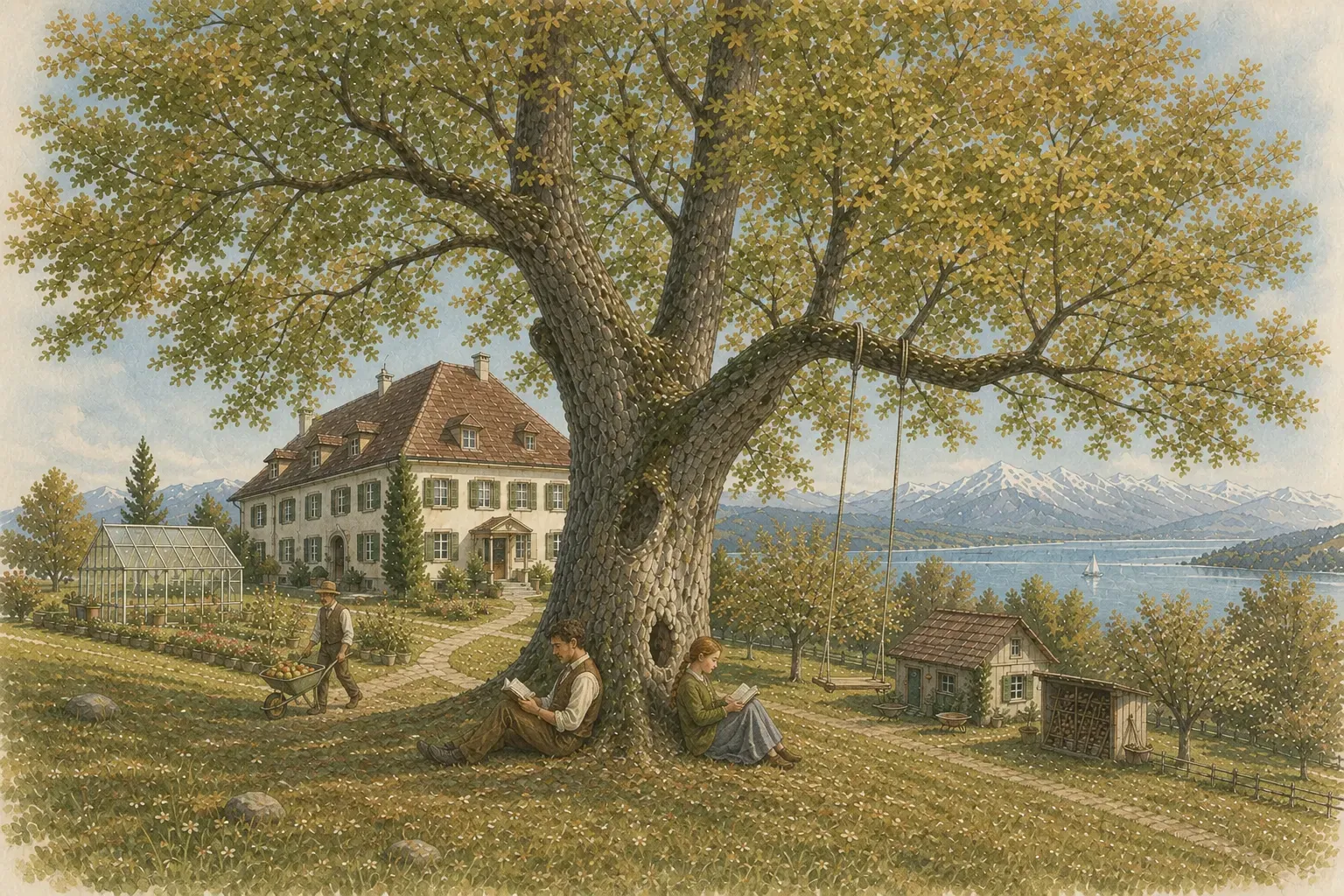
The beginnings that matter most are often the quiet ones.
A new repository. A name written down for the first time. A moment spent answering, honestly: what deserves the finite hours of a life?
Cedar Compass began with that question.
Why a cedar and a compass?
A cedar grows in two directions at once: down into the dark, and upward into open air. It reminds us that lasting growth is usually hidden before it is visible. Reading, reflection, and the repetition of small, deliberate acts become the roots that hold a life steady.
A compass does not choose a destination. It simply helps us recover our bearing when the weather turns and the path grows faint.
When I am learning something unfamiliar, trying to understand myself, or making something of my own, I often need that pause too: a moment to notice where I am.
We are not trying to arrive quickly. We are trying to remember, throughout the long journey, why we set out.
What belongs here
Over time, this journal will follow three paths:
- discoveries from books, conversations, and paying attention to everyday life;
- the feelings and uncertainties of growing, and the choices that shape a life;
- attempts to give those experiences a form, through writing and things I make.
These pages will not always contain answers. More often, they will be trail marks: a record of what seemed true at the time, what later changed, and why.
Keep your bearing. Keep an open mind.
A compass does not make the world simple. Its value is quieter than that: it helps us remain awake inside complexity.
May Cedar Compass become such a place—calm and candid, patient enough to let things grow, and brave enough to begin again when the old direction no longer holds.
A poem for the road
The Drunkards and the Tavern
I’m drunk and you’re insane, who’s going to lead us home?
How many times did they say,
“Drink just a little, only two or three at most?”
In this city no one I see is conscious;
one is worse off than the next, frenzied and insane.
Dear one, come to the tavern of ruin
and experience the pleasures of the soul.
What happiness can there be apart
from this intimate conversation
with the Beloved, the Soul of souls?
In every corner there are drunkards, arm in arm,
while the Server pours the wine
from a royal decanter to every particle of being.
You belong to the tavern: your income is wine,
and wine is all you ever buy.